One Video, Many Markets: Turning a Proven Faceless Video Into Several
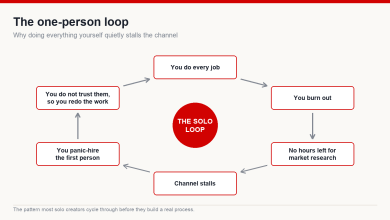
There is a reflex that shows up the moment a channel starts working: go and find the next topic. I had it for years. Something performs, and instead of asking what else that single result can produce, you treat it as finished and start the search again.
The more useful reflex is the opposite one. A video that has worked has already passed the tests that are hard to pass – the subject has real pull, the opening holds, the structure keeps people watching. That is expensive information. Before spending it on one upload in one language, it is worth asking how far the same piece of work can travel.
Why a proven video is the right thing to translate
Most of the cost of a video is not in the recording. It is in the research, the writing, the decisions about structure, and the edit. All of that is language-independent. When you make a version for another market, you are keeping everything expensive and replacing something cheap.
There is a second reason, which is about risk. Translating an unproven video multiplies a guess. Translating a proven one at least starts from something that has demonstrably held an audience, even if a different audience may not respond the same way.
Approach one: keep the video, change the voice
The simplest version, and the one worth starting with. You have a finished master: script, narration, edit, music. To make another language version, you translate the script, produce narration in the target language, and leave everything else alone.
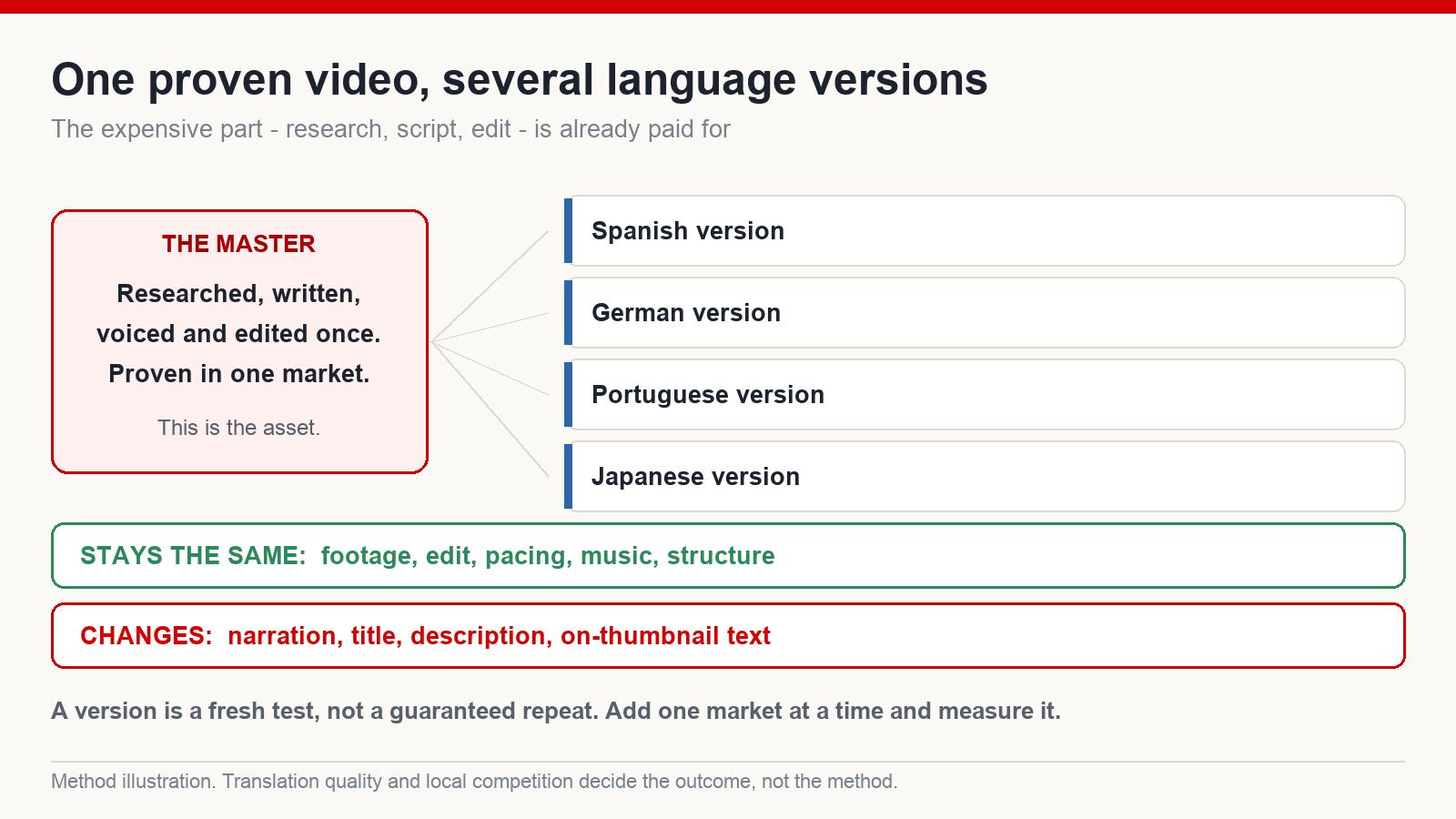
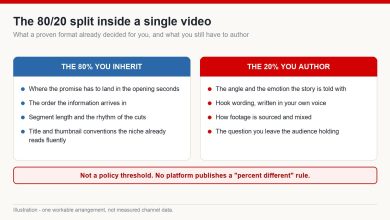
What stays: footage, cuts, pacing, music, structure. What changes: narration, title, description, and any text sitting on the thumbnail. Nothing is rebuilt, and one finished production becomes several.
The part people underestimate is the translation itself. A script translated word for word reads as translated, and narration reads it as translated too. It needs someone – or something checked by someone – who can make it sound like a person speaking that language, not a document converted into it. This is the single biggest quality difference I see between versions that work and versions that do not.
Approach two: several audio tracks on one video
The platform supports multiple audio tracks on a single upload, so one video can carry narration in several languages and the viewer picks. Administratively this is the tidiest option: one video, one set of comments, one performance history.
The trade is measurement. Everything is pooled. You cannot easily see that one market is responding and another is not, and you cannot test different packaging per market, because there is one thumbnail and one title.
Approach three: a channel per language
This is what most people running several markets end up doing, and the reason is not ideological. It is that separate channels give you separate data.
With one channel per language you can see how each market actually behaves, test thumbnails and titles for that audience specifically, and watch how the advertising economics differ – because they differ a great deal by country and subject. Pooled, all of that is invisible.
Practical note: create additional channels through the platform’s own account tools, and add collaborators using its permission roles rather than sharing logins. This is a supported thing to do and there is no need to make it complicated.
What travels, and what does not
Not every subject survives a border, and finding that out after producing five versions is an expensive way to learn it.
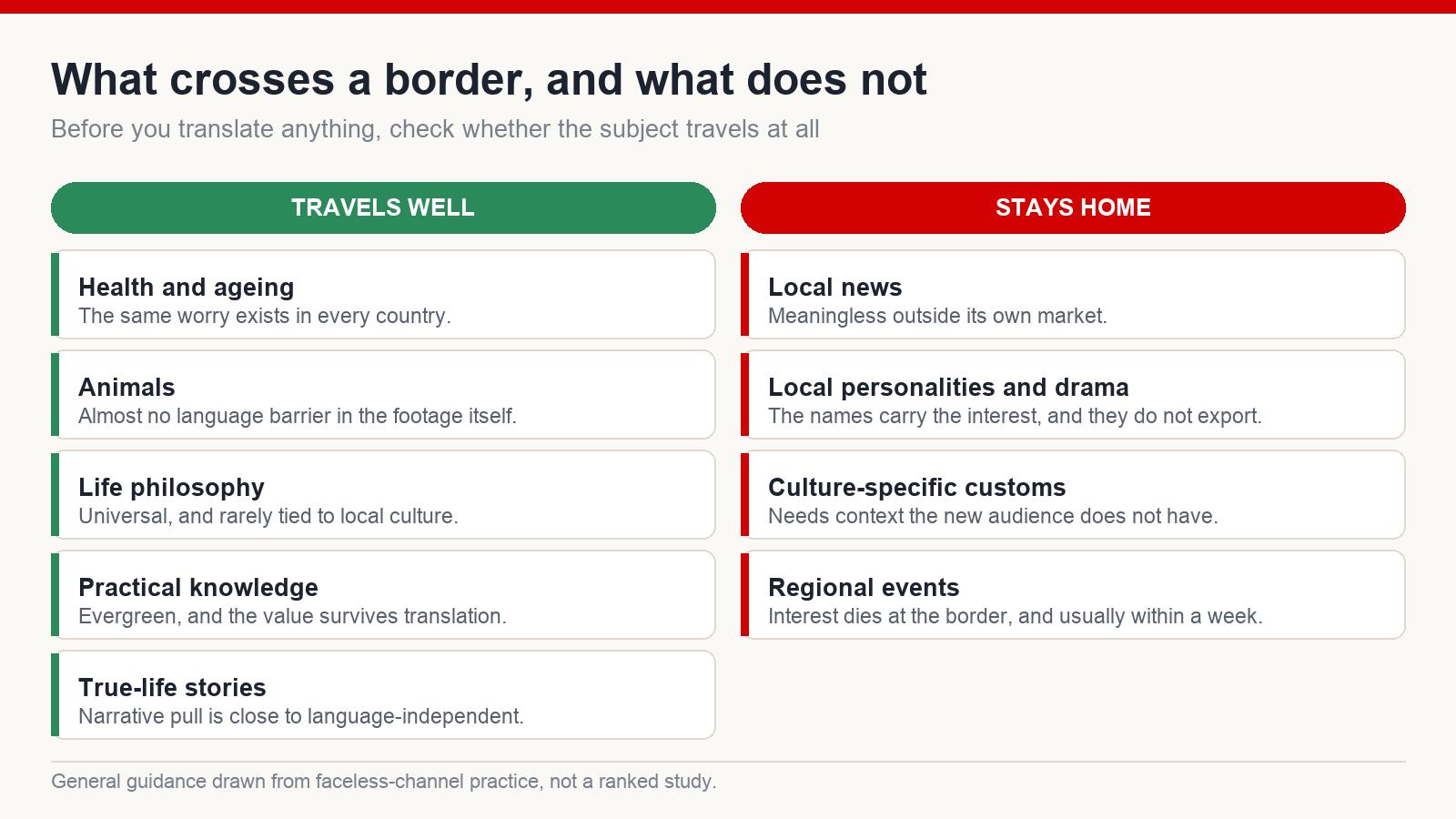
Subjects that travel share a property: the interest does not depend on knowing anything local. Health and ageing – the same worry exists everywhere. Animals – the footage does most of the work and needs no translation at all. Life philosophy and ideas. Practical knowledge. True-life stories, where narrative pull is close to language-independent.
Subjects that stay home share the opposite property. Local news, regional events, personalities whose names carry the interest, customs that need context the new audience does not have. Those can perform superbly in their original market and mean nothing outside it. Forcing them across is not a translation problem; it is a demand problem.
Which markets to try first
The usual starting set is the large English-speaking markets, then Western Europe – German, French, Spanish, Italian, Portuguese – and Japan for certain subjects. Brazil is often worth a look because the audience is enormous and competition in some subjects is thinner than in Europe.
The reason to begin with a large market is not that the money is better. It is that a large market gives you a faster, clearer read on whether the subject works at all.
The part where I have to be honest
Replication saves production effort. It does not transfer results. Each new version is a fresh test in a market with its own habits, its own competition and its own view of what is interesting. Some will do nothing, and there is no reliable way to know which in advance.
So sequence it. Prove the subject in one market first. Add a second language and let it run long enough to mean something. Only then add a third. Producing eight versions before any of them has told you anything just means you find out eight times at once.
Two more things worth saying. If narration is synthetic, disclosure requirements apply and they change – read the current rules rather than an article. And a translated script still needs a human check, because narration will confidently read something that no native speaker would ever say.
One winner, several assets
The instinct to abandon a working video and go hunting for the next one is expensive. A subject that has held an audience once, and that does not depend on local knowledge, can become several pieces of work in several markets from a single production effort.
That is not a shortcut to anything. It is just a better use of research you have already paid for.
Frequently asked questions
Do I have to re-edit the video for each language?
Usually not. In most cases only the narration, title, description and any on-thumbnail text change. The footage, cuts and music can stay as they are.
Multiple audio tracks or separate channels?
Multiple tracks are simpler to run. Separate channels give you far better data, because you can see each market’s behaviour and test packaging for it. Most people running several markets seriously end up with separate channels for that reason.
Which subjects translate best?
Ones that do not depend on local knowledge: health and ageing, animals, practical skills, ideas, and true-life stories. Anything tied to local news, personalities or customs tends not to travel.
Should I launch in several languages at once?
I would not. Prove the subject in one market, add a second and let it run, then decide. Launching everything simultaneously gives you a lot of activity and very little information.
Does a version in another language count as duplicate content?
A genuine language version made for a different audience is not the same as republishing the same video repeatedly. What causes trouble is near-identical uploads aimed at the same audience. As always, platform policies change – check the current ones.
I have been building faceless channels for English-speaking audiences since 2017, and the discipline of exploiting one winner properly took me far longer to learn than the production side ever did. More of how I work is at mmoyoutube.com.